For travel sellers, access to airline content is only one part of the retailing journey. Once a traveller selects an offer and completes a booking, another important stage begins: managing that booking throughout its lifecycle.
This is where NDC order management and servicing become increasingly important.
NDC is often discussed in the context of richer airline content, differentiated offers and more direct connectivity. However, its role can extend beyond shopping and booking. A complete NDC implementation also needs to consider what happens after an order has been created—from retrieving booking details to managing changes, cancellations and refunds.
From Booking to the Complete Order Lifecycle
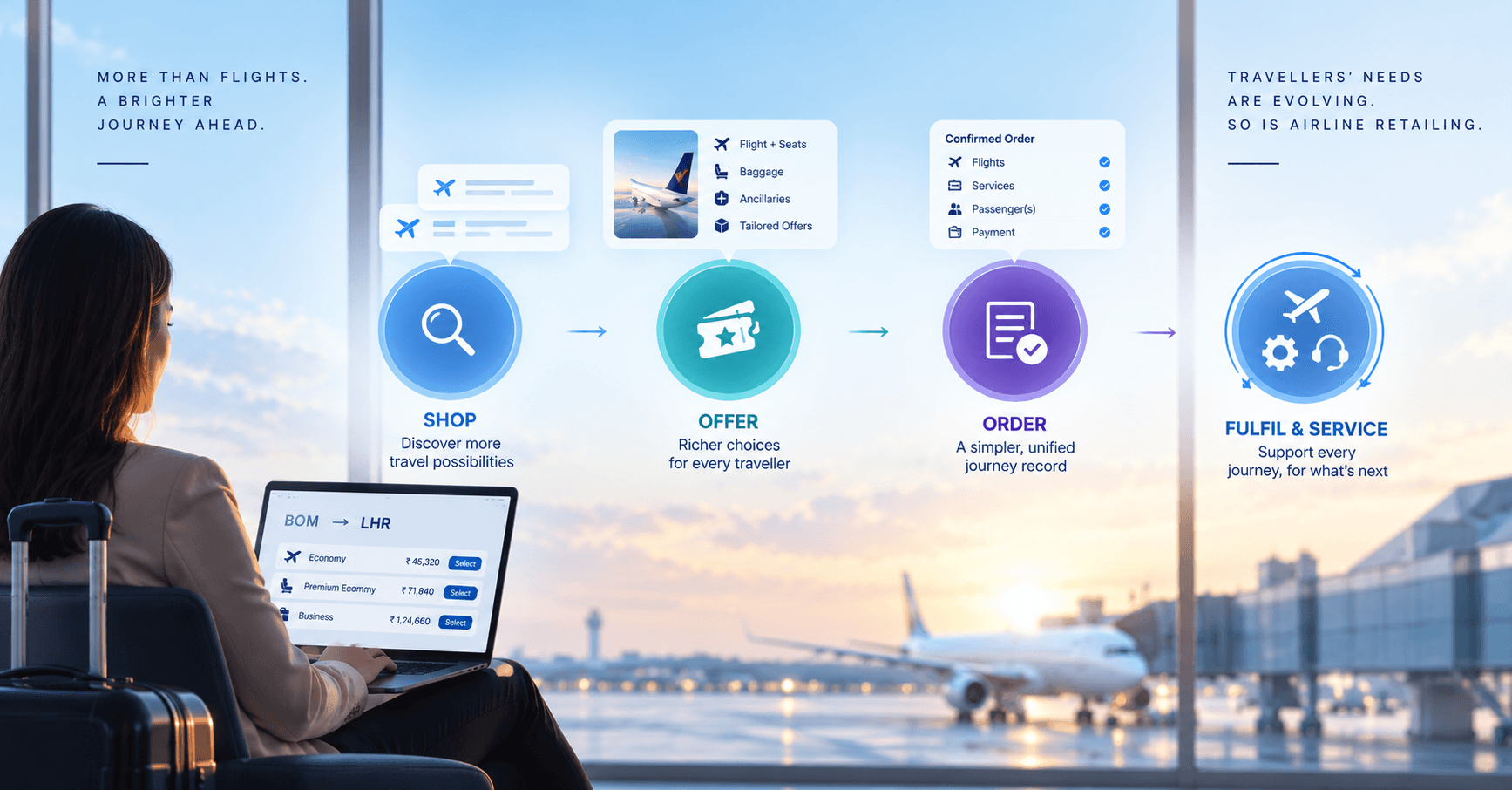
Traditional airline distribution has evolved around established processes involving reservations, tickets and related records. NDC introduces a more retailing-oriented approach in which airlines can distribute offers and support resulting orders through modern API-based interactions.
For travel sellers, this means looking beyond whether an API can simply search and book a flight.
A broader airline retailing workflow can include:
Search → Price → Book → Fulfil → Retrieve → Service → Refund
The precise capabilities available vary by airline and implementation, but the objective is straightforward: enable travel sellers to support more of the traveller journey through connected digital workflows.
What Is NDC Order Management?
Once an airline offer has been selected and a booking completed, the resulting order contains information relating to the traveller's purchase and associated services.
Order management refers to the processes used to retrieve and manage that order after creation.
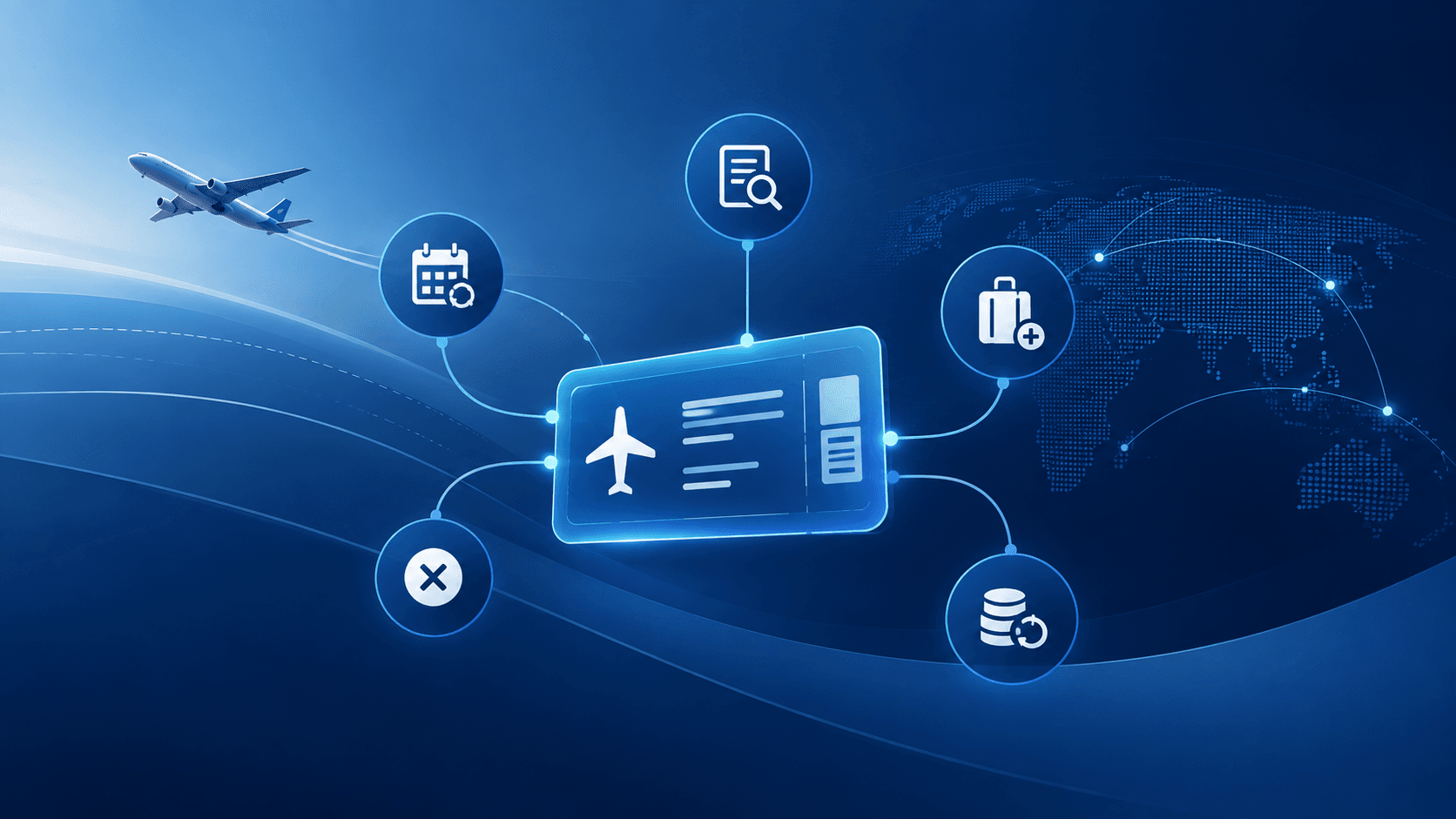
Depending on the airline's capabilities, this can include accessing itinerary and passenger information, reviewing purchased services, adding eligible ancillary services, requesting changes, cancelling an order or initiating a refund.
This makes order management an important consideration when evaluating NDC connectivity.
Access to compelling airline offers is valuable, but travel sellers also need effective ways to support travellers when their requirements change.
Why Servicing Matters
A traveller's journey rarely ends when the booking confirmation is issued.
Flights may need to be changed. Additional baggage or other services may be required. A traveller may need to cancel a trip. A refund may need to be requested.
If these processes cannot be handled efficiently through the same distribution environment, travel businesses may need to rely on multiple systems or manual processes to service a booking.
For travel management companies, online travel agencies and other travel sellers managing significant booking volumes, this can introduce operational complexity.
Effective NDC servicing therefore helps connect airline retailing with the practical requirements of day-to-day travel operations.
Common Post-Booking Capabilities
NDC implementations differ between airlines, and not every carrier supports the same servicing functionality. However, several capabilities are particularly relevant to travel sellers.
Order Retrieval
Retrieving the latest order information gives travel sellers visibility into the booking, travellers, itinerary and associated services.
Changes and Repricing
When a traveller wants to change an itinerary, the existing order may need to be evaluated against alternative options and applicable airline conditions.
Depending on the airline implementation, this may involve reshopping or repricing before a change can be confirmed.
Ancillary Services
Modern airline retailing increasingly extends beyond the base flight.
Where supported, post-booking servicing may allow sellers to manage eligible ancillary products and services associated with an existing order, such as seats or baggage.
Cancellation and Refund
Cancellation and refund workflows are another important part of servicing.
Applicable rules, refundability and processes remain subject to the airline's policies and the conditions of the purchased offer. Supported NDC workflows can provide a structured mechanism through which cancellation and refund requests are processed.
The Challenge of Multiple Airline Implementations
One practical challenge for travel sellers is that NDC capabilities are not necessarily identical across airlines.
Different carriers may use different schema versions, implement different workflows or provide different levels of servicing.
One airline may support extensive post-booking functionality while another may provide a more limited set of actions.
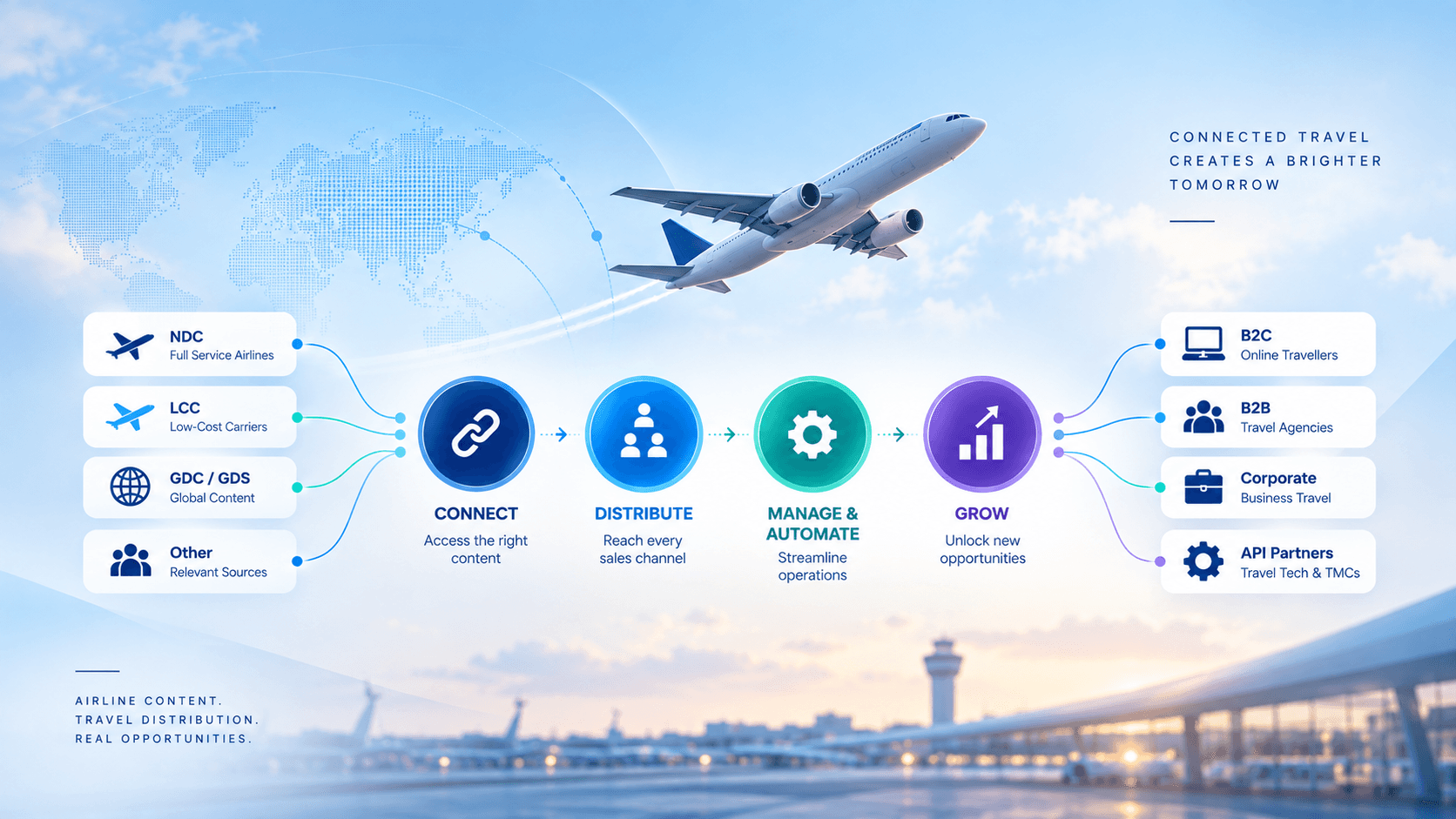
This is where the role of an NDC aggregator can extend beyond connecting multiple airline shopping APIs.
An aggregation layer can help normalise different airline integrations into more consistent workflows for travel sellers.
Instead of developing and maintaining separate integrations for every airline, travel businesses can work through a unified interface while the aggregation platform manages many of the underlying airline-specific differences.
Building for Servicing, Not Just Shopping
When evaluating an NDC integration, travel sellers should therefore consider more than airline coverage and shopping functionality.
Important questions include:
- What happens after a booking is created?
- Can an existing order be retrieved?
- Which changes can be managed digitally?
- Are ancillary, cancellation and refund workflows supported?
- How are airline-specific differences handled?
- How consistently can these capabilities be exposed through one integration?
These questions become increasingly important as NDC becomes part of everyday airline retailing.
Towards a More Connected Retailing Journey
NDC provides travel sellers with new ways to access airline offers and modern retailing capabilities. Delivering a complete customer experience, however, requires more than content availability.
The greater opportunity comes when shopping, booking, fulfilment and servicing work together as part of a connected journey.
For travel sellers adopting NDC, designing for the complete order lifecycle can help reduce fragmentation and create a stronger foundation for scalable airline retailing.
At Pratra, our focus is on simplifying airline connectivity and helping travel businesses access and manage supported airline content through unified technology while accommodating the different capabilities and workflows provided by individual airlines.
Because modern airline retailing should extend beyond the booking itself.