Airline distribution has evolved far beyond simply connecting a booking system to a source of fares and availability.
NDC, direct airline APIs, LCC connectivity and other distribution channels are giving travel sellers more ways to access airline content. At the same time, travellers increasingly expect relevant options, convenient digital experiences and effective support throughout their journey.
For travel businesses, this creates an important shift in thinking.
Connectivity is the foundation. Retailing is the strategy.
A modern airline distribution approach needs to consider not only how content is accessed, but how it is distributed, sold, serviced and managed as the business grows.
Connectivity Is the Starting Point
Every airline retailing journey begins with content.
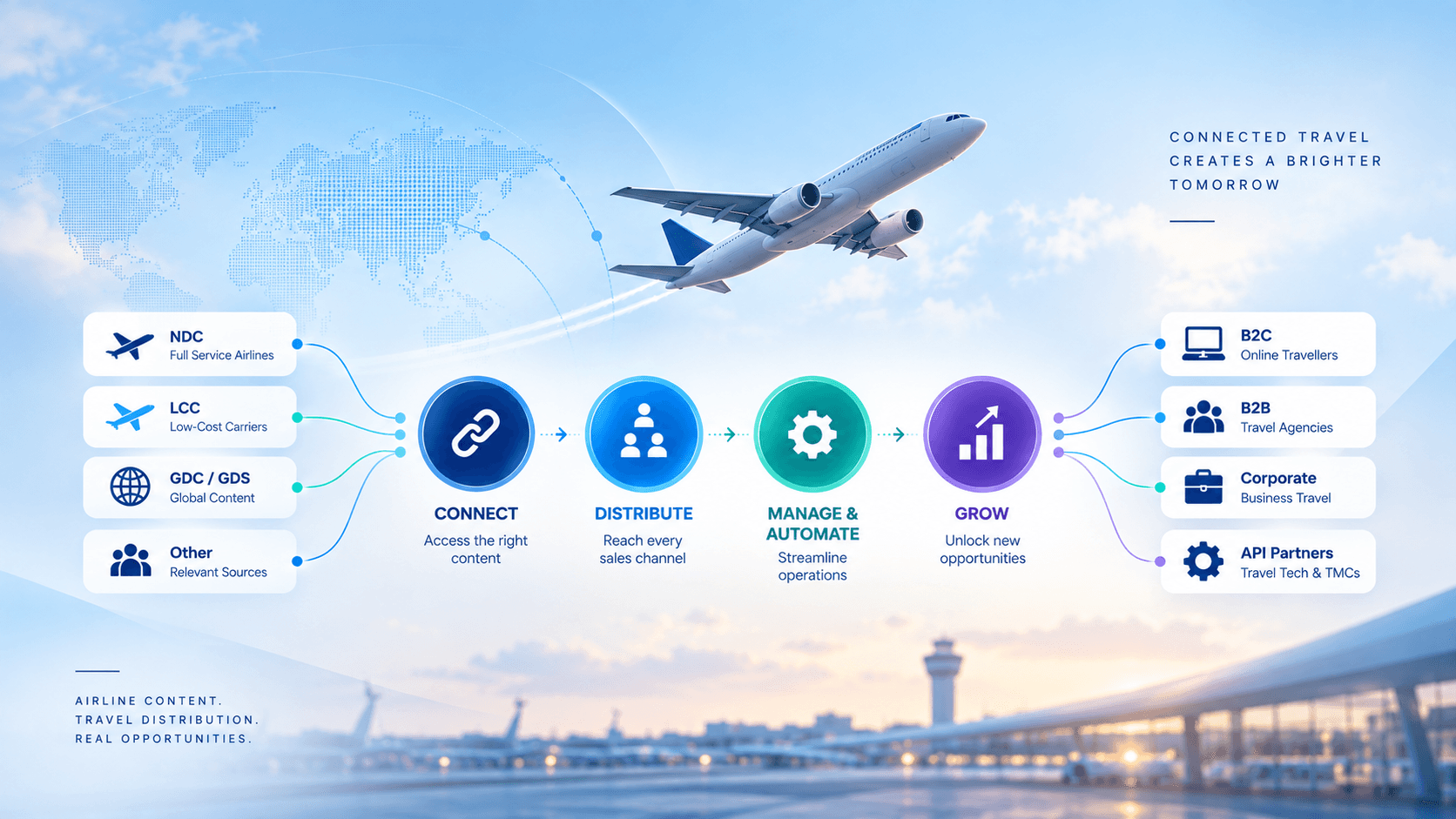
Depending on the markets and customers being served, a travel seller may require a combination of NDC connections, LCC APIs and other relevant airline distribution sources.
But simply adding more connections does not necessarily create a stronger proposition.
The more useful question is whether the business has access to the right airlines, content and capabilities for its customers.
An OTA serving leisure travellers may prioritise a different combination of carriers and fares from a travel management company supporting international corporate travel. Similarly, an agency expanding into a new market may need to introduce additional airline sources as customer demand develops.
A modern distribution strategy therefore starts by connecting content around business requirements rather than pursuing connectivity for its own sake.
Turn Airline Content Into a Retailing Experience
Once content is available, it needs to reach the customer.
That could mean an online travel agency selling directly to consumers, a B2B portal used by travel agents, a corporate booking environment or an external application consuming airline content through an API.
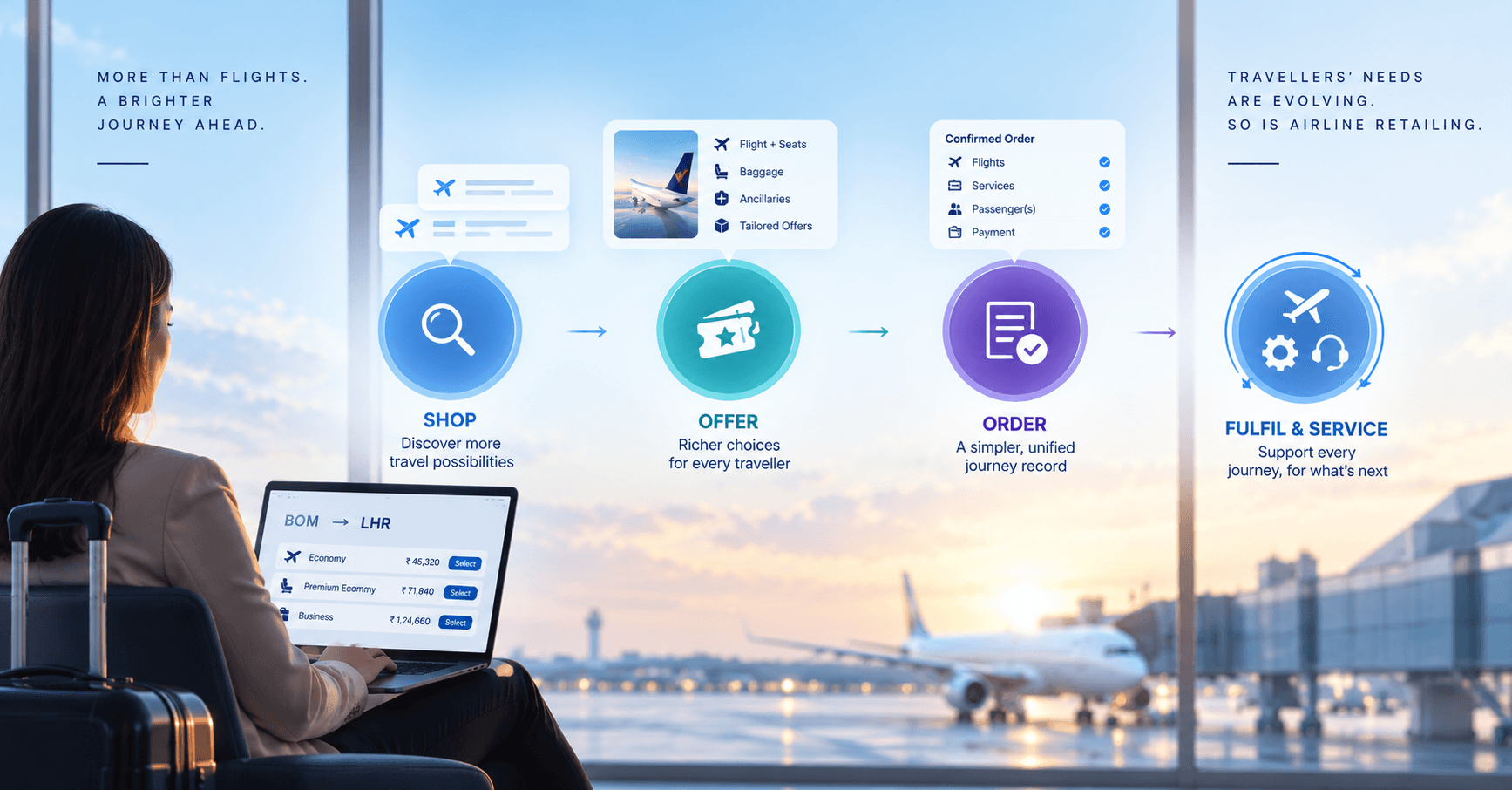
This is where airline connectivity becomes airline retailing.
The underlying content needs to be transformed into experiences where users can search relevant flights, understand available offers, select applicable services and complete a booking through the appropriate channel.
The challenge becomes greater when content originates from multiple sources.
Different airlines and distribution channels may structure offers, fares, baggage, ancillaries and booking workflows differently. A connected technology layer can help manage these differences and make content easier to distribute through multiple customer-facing applications.
The objective is not to make every airline identical. It is to create enough consistency that different airline products can be effectively retailed while preserving relevant characteristics of each offer.
Distribution Should Follow the Customer
Modern travel businesses rarely operate through only one sales channel.
The same airline content may need to support different audiences:
- consumers booking through B2C websites;
- agents working through B2B platforms;
- corporate travellers using managed booking tools;
- travel advisors supporting customers directly; or
- external applications connecting through APIs.
Each channel can have different commercial and user-experience requirements.
A scalable distribution strategy should therefore separate the complexity of underlying airline connectivity from the experience presented to the end user.
When content and distribution are structured this way, businesses can expand into additional channels without necessarily rebuilding every airline integration behind them.
This creates a more flexible foundation for growth.
Retailing Continues After the Booking
A successful airline retailing experience does not end when a booking is confirmed.
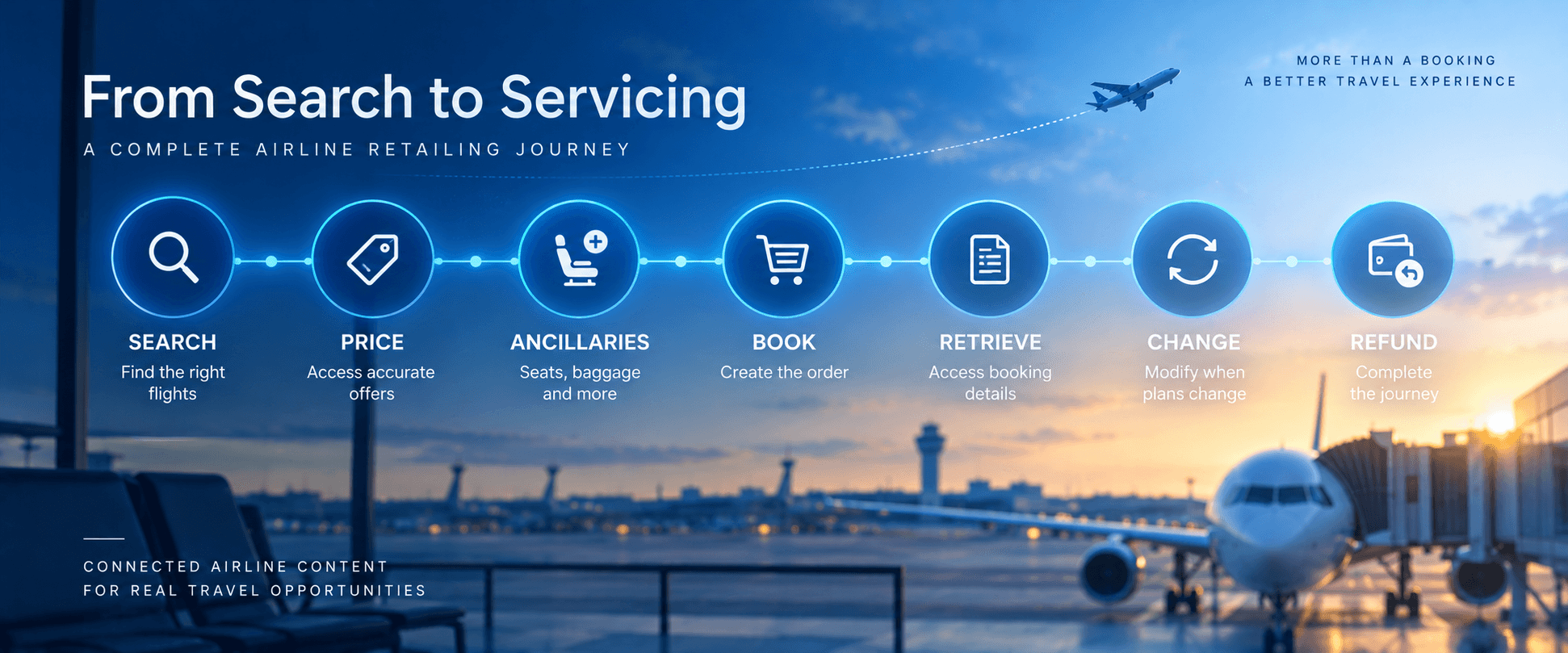
Travellers may need to retrieve their itinerary, add eligible services, change their plans, cancel a journey or request a refund.
The capabilities available will vary by airline, source, market and seller entitlement. Nevertheless, post-booking servicing needs to be considered when designing the overall distribution strategy.
If shopping and booking are digital but subsequent servicing depends heavily on disconnected processes, the customer and operational experience can become fragmented.
This is why modern airline retailing increasingly needs to consider the broader lifecycle:
Search → Price → Book → Fulfil → Retrieve → Service
Where supported, connecting these stages can help travel sellers create a more continuous experience for customers and the teams supporting them.
Operations Need to Scale With Distribution
As a travel business expands, distribution creates operational requirements behind the scenes.
More customers, channels, airlines and bookings can mean more information to manage across reservations, servicing, finance, reconciliation, customer management and reporting.
If front-end distribution grows while operational processes remain fragmented, complexity can increase quickly.
The technology supporting modern distribution therefore needs to consider both sides of the business:
how travel is sold and how travel is managed.
Connecting customer-facing booking experiences with appropriate operational workflows can reduce unnecessary duplication and provide better visibility across the travel business.
Automation can also become increasingly valuable as transaction volumes grow, particularly for repetitive processes that would otherwise require manual intervention.
Build for Change, Not Just Today's Requirements
Airline distribution will continue to evolve.
Airlines will introduce new capabilities. NDC implementations will develop. Servicing workflows will mature. Customer expectations will change, and travel sellers may enter new markets or introduce new sales channels.
Technology decisions should therefore account for change from the beginning.
A travel business that tightly couples every customer-facing application to individual airline integrations may find expansion increasingly difficult.
A more flexible architecture separates connectivity, distribution and operational capabilities so that individual parts of the ecosystem can evolve without requiring the entire environment to be rebuilt.
This creates a foundation that can accommodate new airline connections, additional channels and emerging retailing capabilities over time.
From Connectivity to Growth
A modern airline distribution strategy can ultimately be viewed as a connected progression:
Connect → Distribute → Manage & Automate → Grow
Connect the airline content and capabilities relevant to the business.
Distribute that content through the channels where customers and travel sellers need it.
Manage and automate the workflows that support bookings and ongoing travel operations.
Grow by expanding airlines, markets, customers and distribution channels on a scalable technology foundation.
Each stage supports the next.
Connectivity without distribution limits commercial reach. Distribution without effective servicing and operations can create complexity. And growth becomes harder when every expansion requires another disconnected technology implementation.
Building a More Connected Travel Business
Modern airline distribution is therefore about more than APIs, airline counts or booking interfaces.
It is about creating a connected environment where content can move efficiently from airlines to the channels and customers that need it—and where the resulting travel journey can continue to be supported after the sale.
At Pratra, this principle shapes how we think about travel technology: connecting airline retailing, digital distribution and travel operations through technology designed to work together.
The objective is not simply to add more technology.
It is to make connectivity, distribution and operations work as one scalable foundation for growth.