Airline distribution is changing rapidly. NDC has given airlines new ways to distribute offers, provide richer content and support more modern retailing experiences. But for travel sellers building comprehensive flight offerings, NDC is only one part of the distribution landscape.
Different airlines operate through different commercial and technical models. Some provide direct NDC connectivity, low-cost carriers may operate through their own APIs, while other airline content may continue to be available through established distribution channels.
For OTAs, TMCs, travel agencies and corporate travel platforms, the challenge is therefore not simply gaining access to one type of content.
It is building the right mix of airline content for the customers and markets they serve.
Airline Content Is Not a Single-Source Environment
Travellers rarely think about how airline content reaches a booking platform.
They expect relevant flights, competitive options and the ability to manage their journey.
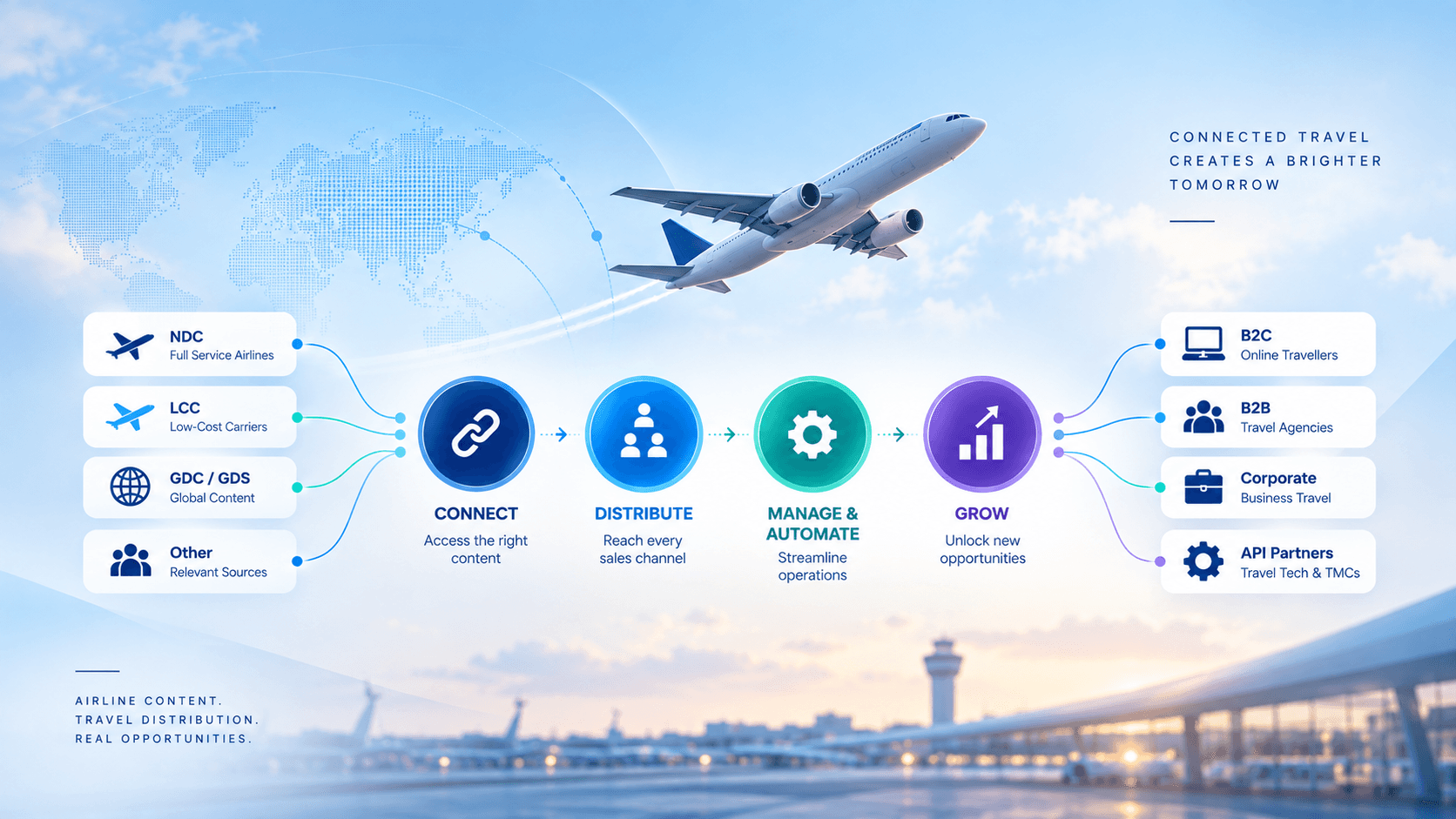
Behind that experience, however, a travel seller may need to work with several different content sources.
These can include:
- direct NDC airline connections;
- NDC content available through aggregators;
- LCC API connections;
- established distribution systems; and
- other airline or consolidator content relevant to particular markets.
Each source can have different technical requirements, commercial arrangements and servicing capabilities.
A modern airline content strategy therefore needs to consider more than simply the number of airlines available.
It needs to consider which content is relevant, how it is connected and how effectively it can be sold and serviced.
Where Does NDC Fit?
NDC has become an important part of modern airline retailing.
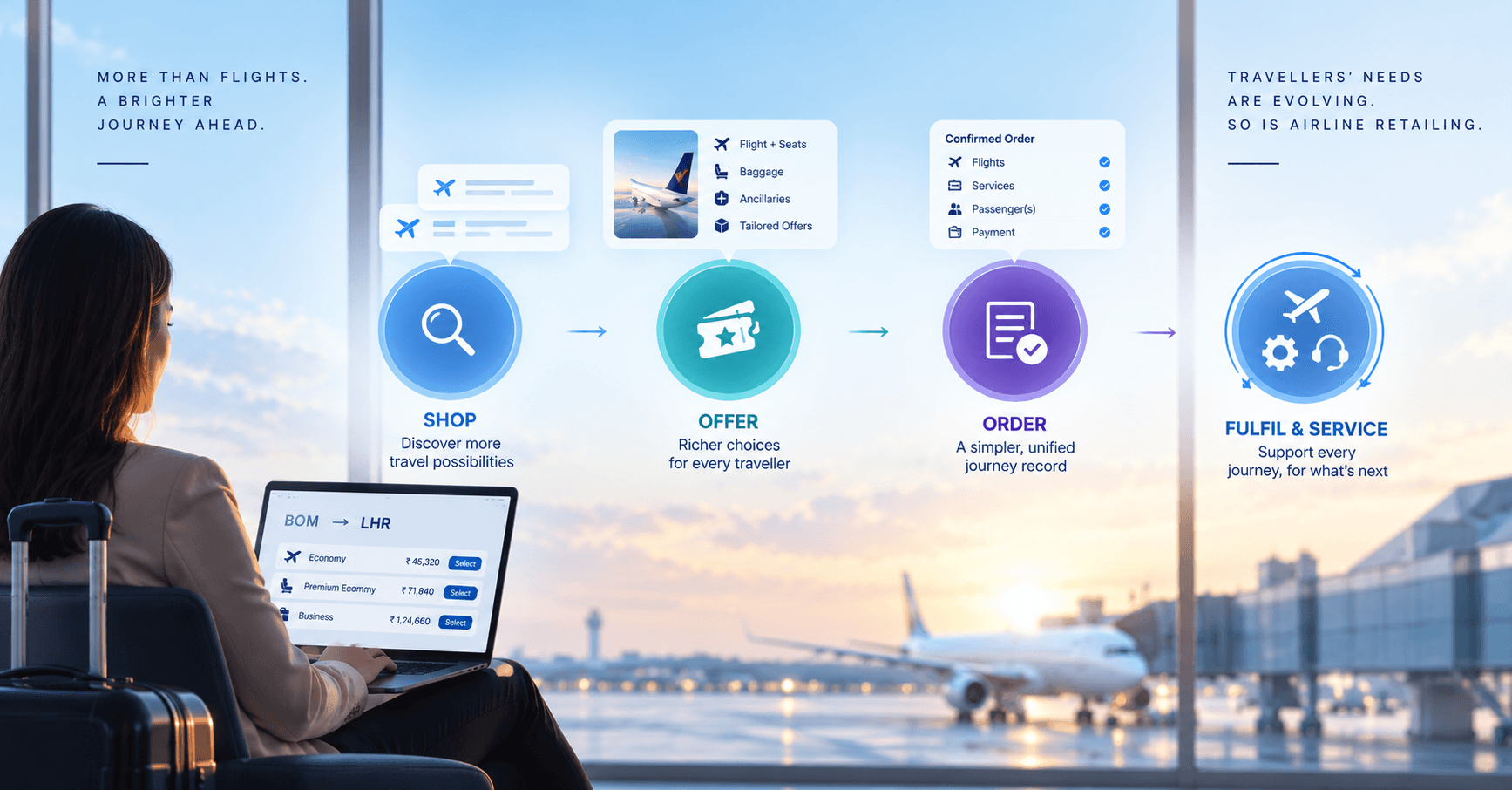
Through NDC, airlines can distribute offers using modern API-based standards and provide travel sellers with access to airline-defined products and services.
Depending on the airline and seller entitlement, this can include branded fares, baggage options, seats, ancillary services and other differentiated offers.
NDC can also support workflows beyond shopping, including booking, fulfilment and post-booking servicing where those capabilities are implemented by the airline.
For travel sellers, this creates opportunities to access airline content in ways that are more closely aligned with the airline's own retailing strategy.
But NDC does not mean every airline or every market suddenly operates through the same distribution model.
Why LCC Connectivity Matters
Low-cost carriers represent an important part of airline supply in many markets.
Many LCCs have developed their distribution models around direct digital channels and APIs rather than relying exclusively on traditional distribution infrastructure.
For a travel seller operating in a market where LCCs represent meaningful traveller demand, excluding this content can reduce the range of options available to customers.
LCC connectivity can therefore be an important component of a broader airline strategy.
However, LCC APIs can differ significantly between carriers. Search structures, fare rules, baggage, ancillary services, payment processes and booking workflows may all be implemented differently.
This creates a similar challenge to multi-airline NDC connectivity: how can different sources be brought into a consistent application experience?
From Multiple Sources to One Experience
Adding more content sources does not automatically create a better booking platform.
If each source requires completely separate application logic and workflows, increasing content can also increase technical complexity.
This is where aggregation and normalisation become important.
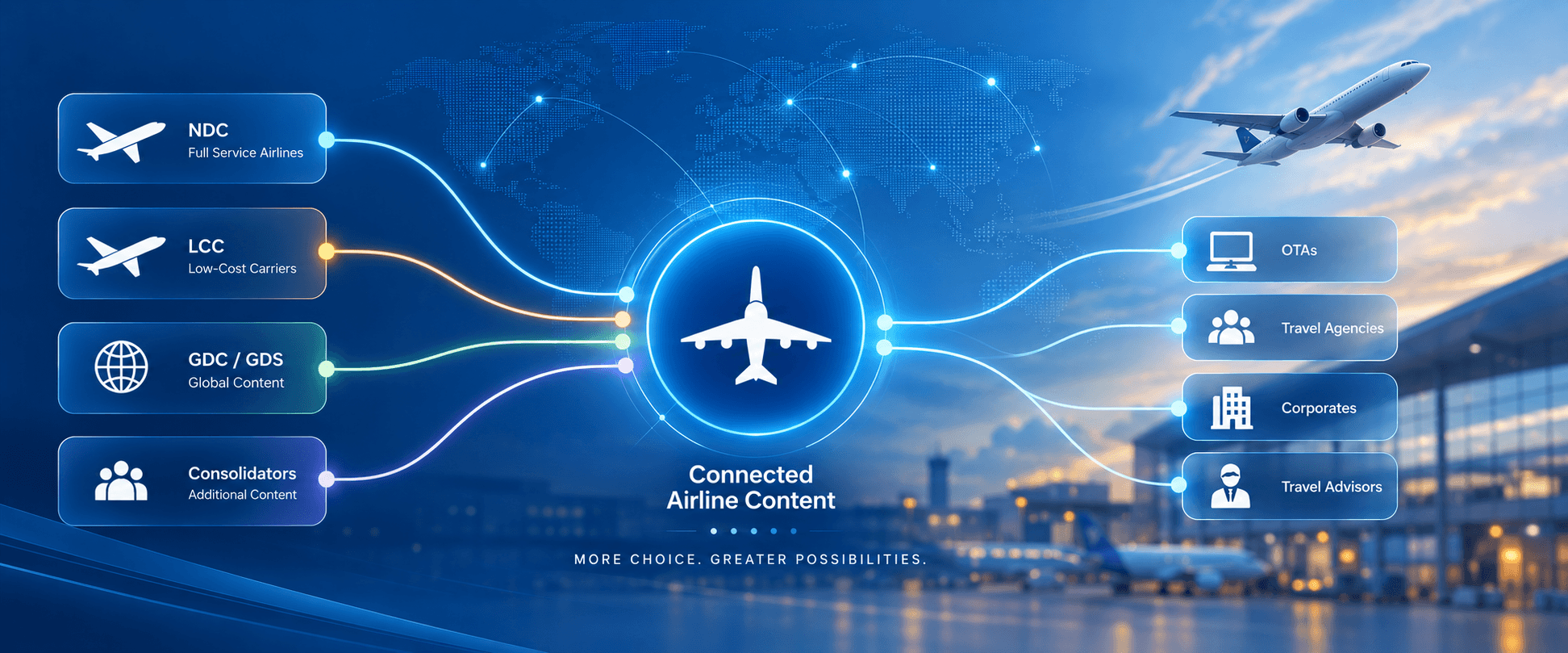
A connected distribution layer can bring different airline sources together and expose supported content through a more consistent integration.
A simplified model might look like:
NDC + LCC + Other Airline Sources → Aggregation & Normalisation → Unified Integration → Travel Seller
The objective is not to make every airline product identical.
Airline-specific fares, services, commercial rules and capabilities still need to be preserved where relevant.
Instead, the goal is to reduce unnecessary technical differences while allowing the seller to access the characteristics that make each airline offer valuable.
More Content Is Not Always the Same as Better Content
Airline coverage is often presented as a headline number.
But a travel seller should ask a more important question:
Is the available content relevant to our customers?
A business focused on travel within Asia may have very different airline priorities from a TMC serving corporate travellers between Europe and North America.
Similarly, an OTA serving leisure travellers may require a different mix of full-service and low-cost airline content.
A useful content strategy therefore starts with demand rather than connection counts.
Travel sellers should consider:
- their primary origin and destination markets;
- airlines most frequently requested by customers;
- customer segments and travel patterns;
- required fare and ancillary content;
- booking and servicing requirements;
- existing airline or distribution agreements; and
- accreditation, payment and settlement arrangements.
Technology should then support that commercial strategy.
Don't Forget the Booking Lifecycle
Content availability at search is only the beginning.
Travel sellers also need to consider what happens when the traveller selects an offer.
Can the offer be priced and confirmed? Can the booking be fulfilled? Can the order subsequently be retrieved? What happens if the traveller wants to add a service, make a change, cancel or request a refund?
These capabilities can vary by airline and content source.
A multi-source strategy should therefore evaluate both content breadth and workflow depth.
The objective should be to create a distribution environment that supports as much of the traveller journey as possible while clearly accounting for capabilities that remain specific to individual airlines or sources.
Building the Right Content Strategy
There is no universal combination of airline content that is right for every travel business.
A better approach is to begin with the commercial requirements of the seller and work backwards.
Which markets need to be served?
Which airlines matter most?
Which content and servicing capabilities are required?
Which connections already exist?
And how can those sources be brought into the technology environment without creating unnecessary integration complexity?
Answering these questions helps transform airline connectivity from a technical exercise into a distribution strategy.
Connecting Content Around the Traveller
The future of airline distribution is unlikely to be defined by a single source of content.
NDC is an important part of that future, but travel sellers ultimately need access to the airline options that are relevant to their customers—regardless of the underlying connectivity model.
The opportunity lies in bringing those sources together while creating a consistent experience for the applications, agents and travellers using them.
At Pratra, our approach is centred on connecting and simplifying airline content so travel businesses can build distribution around their markets and customers rather than around the complexity of individual airline integrations.
Because the goal isn't simply to connect more content.
It's to connect the right content to the right traveller.