Airline connectivity is often described in terms of coverage: how many airlines are available through a platform or API?
Coverage is important. Travel sellers need access to the airlines that matter to their customers and markets. But an airline appearing on a connectivity list does not necessarily explain what a seller can actually do through that connection.
Can the seller only search for flights? Can an offer be priced and booked? Are seats and baggage available? What happens when a traveller needs to change a journey or request a refund?
This is why travel sellers should increasingly consider capability depth alongside airline coverage.
From Airline Access to Retailing Capability
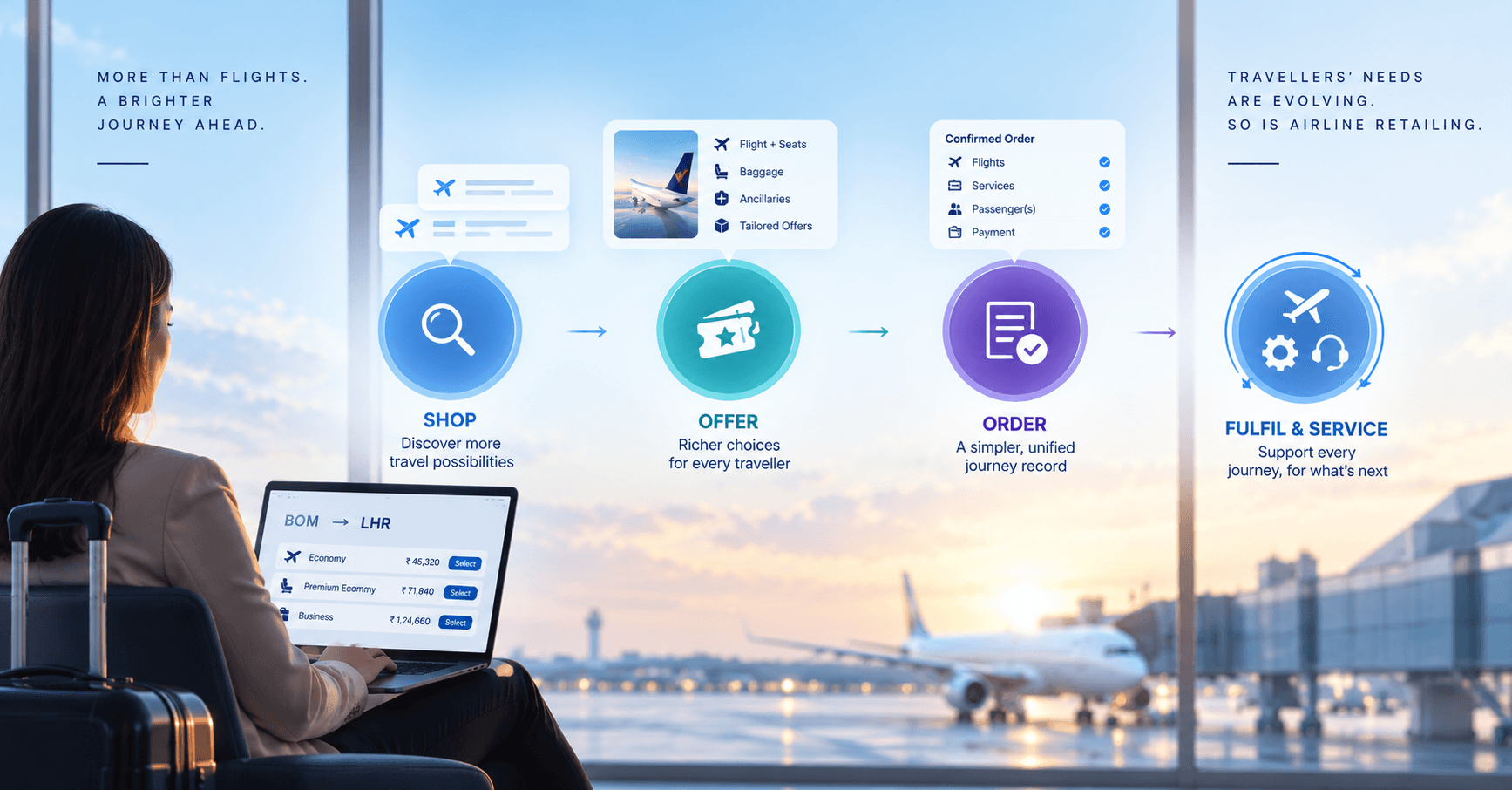
Modern airline retailing involves much more than returning flight availability.
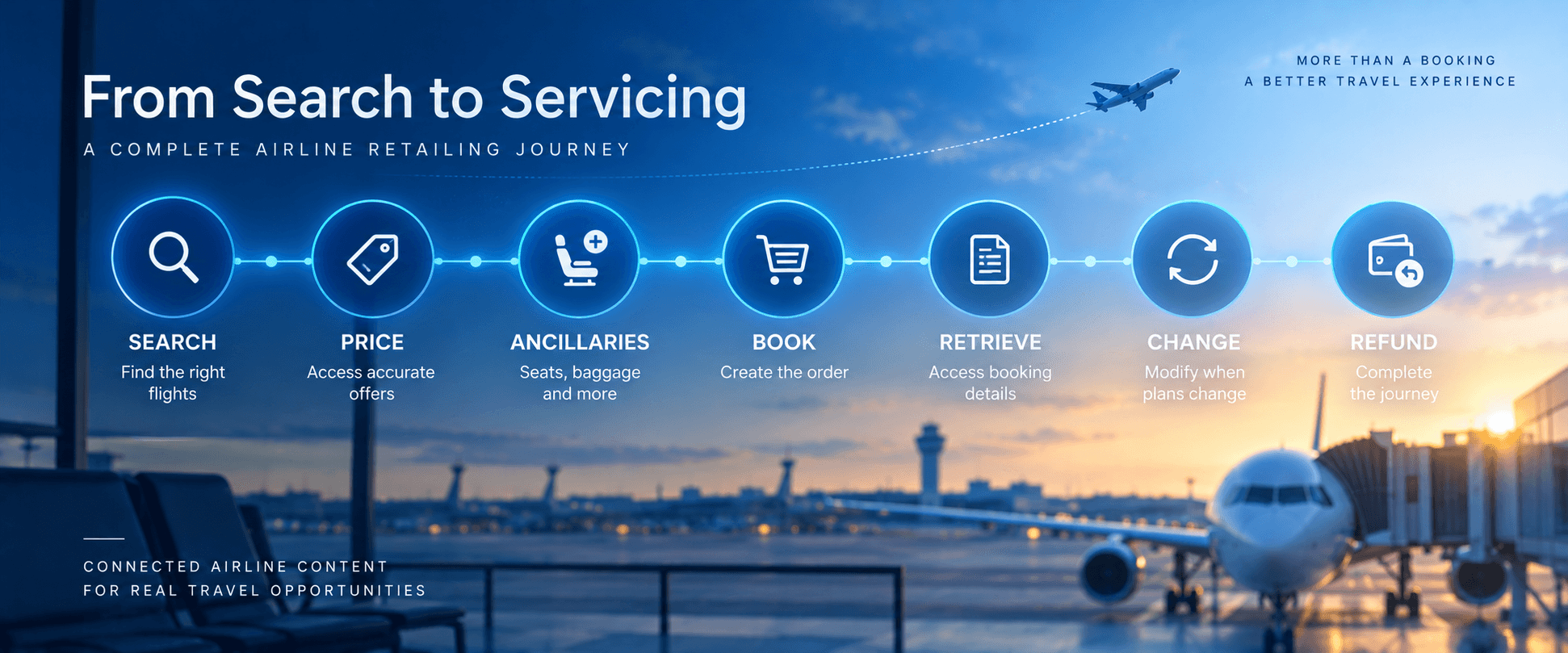
A broader retailing journey can include:
Search → Price → Ancillaries → Book → Fulfil → Retrieve → Change → Cancel / Refund
Each stage represents a practical capability that can affect the experience of the traveller, travel seller and servicing team.
An airline connection that supports shopping and booking provides valuable access to content. A connection that also supports ancillary services and post-booking workflows can enable the seller to manage more of the traveller journey digitally.
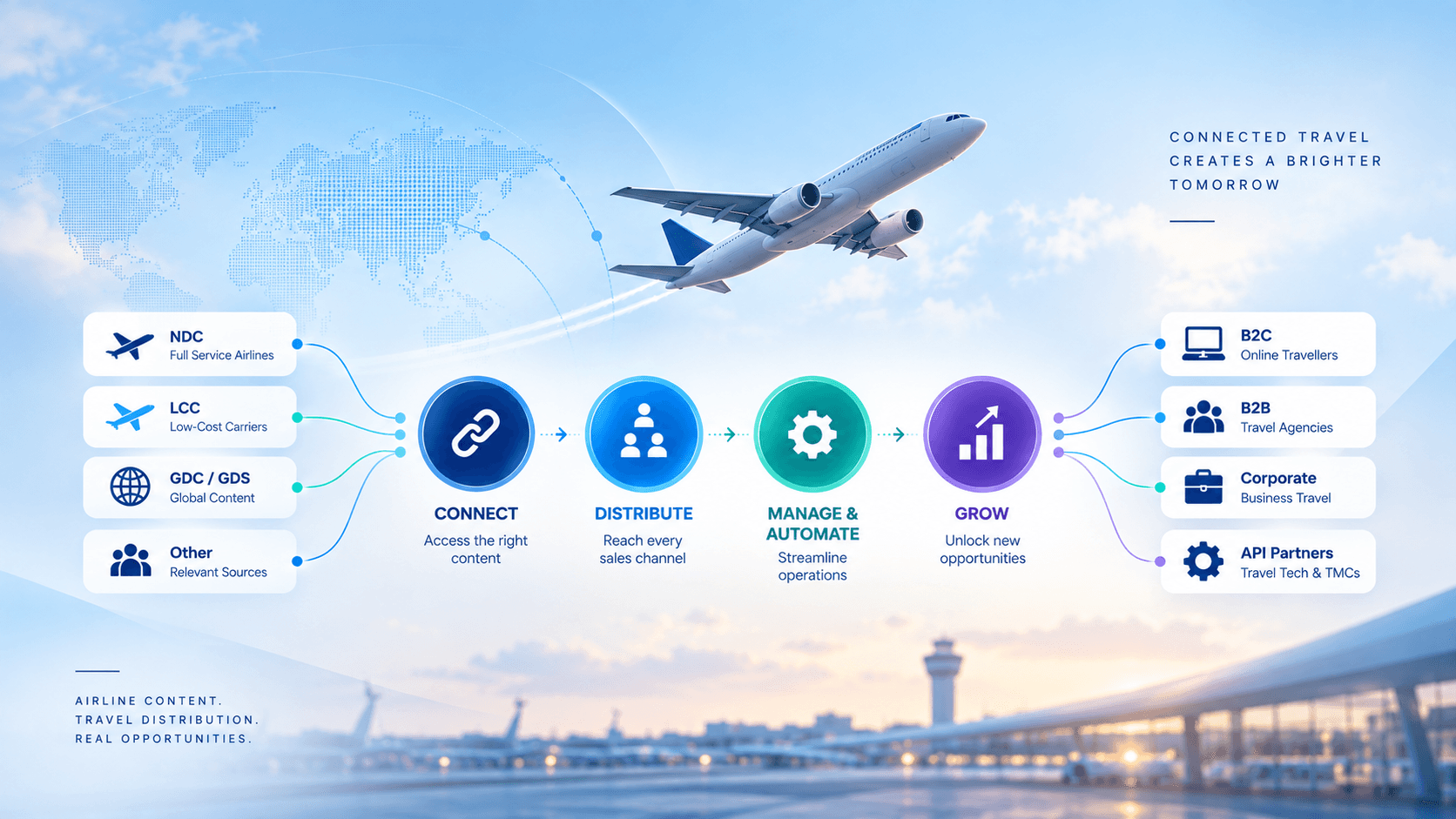
The distinction becomes particularly important as travel businesses expand their airline connectivity.
Shopping Is Only the Beginning
Search is usually the first interaction between a travel application and airline content.
Travel sellers need relevant schedules, fares and offers that can be presented to customers through an OTA, B2B portal, corporate booking tool or agent interface.
But displaying an offer is only the beginning.
Before a booking can be completed, the selected offer may need to be priced or confirmed against current availability and applicable conditions.
This makes search and pricing complementary capabilities rather than interchangeable ones.
Understanding what happens between the initial search and confirmed booking is therefore an important part of evaluating an airline connection.
The Growing Importance of Ancillaries
Modern airline retailing increasingly extends beyond the base fare.
Travellers may want to select seats, purchase additional baggage or choose other services made available by the airline.
Where supported, airline APIs can expose these products as part of the shopping or booking journey.
For travel sellers, ancillary capability can help create a more complete retailing experience by allowing customers to access relevant airline services without moving between disconnected channels.
However, ancillary availability and workflows can differ between airlines.
The important question is therefore not simply whether an integration supports “ancillaries”, but which services are available, at what stage of the journey and for which airline connections.
Booking and Fulfilment
Once the traveller has selected an offer, the connection needs to support the appropriate booking workflow.
This can include creating the airline order and completing the applicable fulfilment or payment process.
The exact workflow depends on the airline, content source, seller arrangement and supported form of payment.
For travel sellers, this is another reason to evaluate connectivity at the capability level.
Two airline connections may both support booking while differing in how fulfilment, payment or related processes are handled.
Understanding these differences before implementation can help businesses design the appropriate customer and operational workflows.
What Happens After the Booking?
The true depth of airline connectivity often becomes most visible after a booking has been completed.
Travel plans change.
A traveller may need to retrieve an itinerary, add an eligible service, modify a journey, cancel a booking or request a refund.
Where supported by the airline, digital servicing capabilities can help travel sellers manage these requirements within connected workflows.
Without appropriate servicing functionality, a seller may need to rely on alternative airline channels or manual processes after the original booking has been created.
For businesses handling significant transaction volumes, that distinction can have an important operational impact.
Why Capabilities Differ Between Airlines
Airline retailing is not implemented identically across every carrier.
Airlines may use different technology environments, API or schema versions and business processes. The capabilities exposed through their distribution interfaces can also evolve over time.
Access may additionally depend on factors such as:
- the airline and market;
- seller eligibility or entitlement;
- commercial agreements;
- accreditation and credentials;
- supported forms of payment;
- API implementation; and
- the specific workflow being requested.
This means airline capability should not be treated as a universal feature that automatically applies across an entire connectivity portfolio.
It needs to be understood at the relevant airline and workflow level.
Coverage and Capability Should Be Evaluated Together
A large airline network can be valuable, but the most useful connectivity strategy is one aligned with the seller's actual business requirements.
Instead of asking only:
“Which airlines can we access?”
travel sellers can also ask:
- Can we search and accurately price the required content?
- Which ancillary services are available?
- Can bookings be created and fulfilled through the required workflow?
- Can existing orders be retrieved?
- Which post-booking changes are supported?
- Are cancellation and refund workflows available?
- Do capabilities differ by airline or market?
These questions provide a more practical picture of what an airline connection can deliver.
Start With the Required Journey
There is no single capability checklist that will be equally important to every travel business.
An OTA focused primarily on leisure travel may prioritise different airlines and ancillary capabilities from a TMC supporting complex corporate journeys.
Similarly, an agency entering a new geographic market may initially prioritise airline availability before expanding into more advanced servicing workflows.
A useful approach is therefore to begin with the customer journey and work backwards.
Identify the priority markets and airlines. Define the required shopping, booking and servicing workflows. Then evaluate whether the available connections support those requirements.
This helps ensure that connectivity decisions are based on usable capability rather than coverage numbers alone.
Towards More Complete Airline Retailing
As airline distribution continues to evolve, connectivity will increasingly be measured not simply by whether an airline can be reached, but by how much of the retailing journey can be supported through that connection.
Coverage establishes access.
Capability depth determines what travel sellers can do with it.
At Pratra, our focus is on simplifying airline connectivity while enabling supported shopping, booking, fulfilment and servicing workflows through unified technology, with capabilities aligned to the underlying airline implementations.
For travel sellers building the next generation of airline retailing experiences, the objective is not simply to connect to more airlines.
It is to create connections that support the journeys their customers actually need.